
If you have ever visited a local processing center in Nigeria—whether in the bustling markets of Aba, the farming communities of Oyo, or anywhere across the Niger Delta, you know the distinct, roaring sound of a cassava grating machine. It is the heartbeat of our local garri, fufu, and starch production.

Cassava is a staple for millions of Nigerians but processing it by hand is backbreaking work. That is where the local mechanical ingenuity of the cassava grater comes in. For fabricators, processors, and engineers, understanding how these machines work, how to maintain them, and how to fix them quickly isn't just a technical skill—it’s what keeps food on the table and the local economy moving.
In this deep dive, we’ll look under the hood of the classic Nigerian cassava grating machine to understand its design, how to keep it running smoothly, and how to tackle common faults.
1. The Anatomy of a Cassava Grating Machine
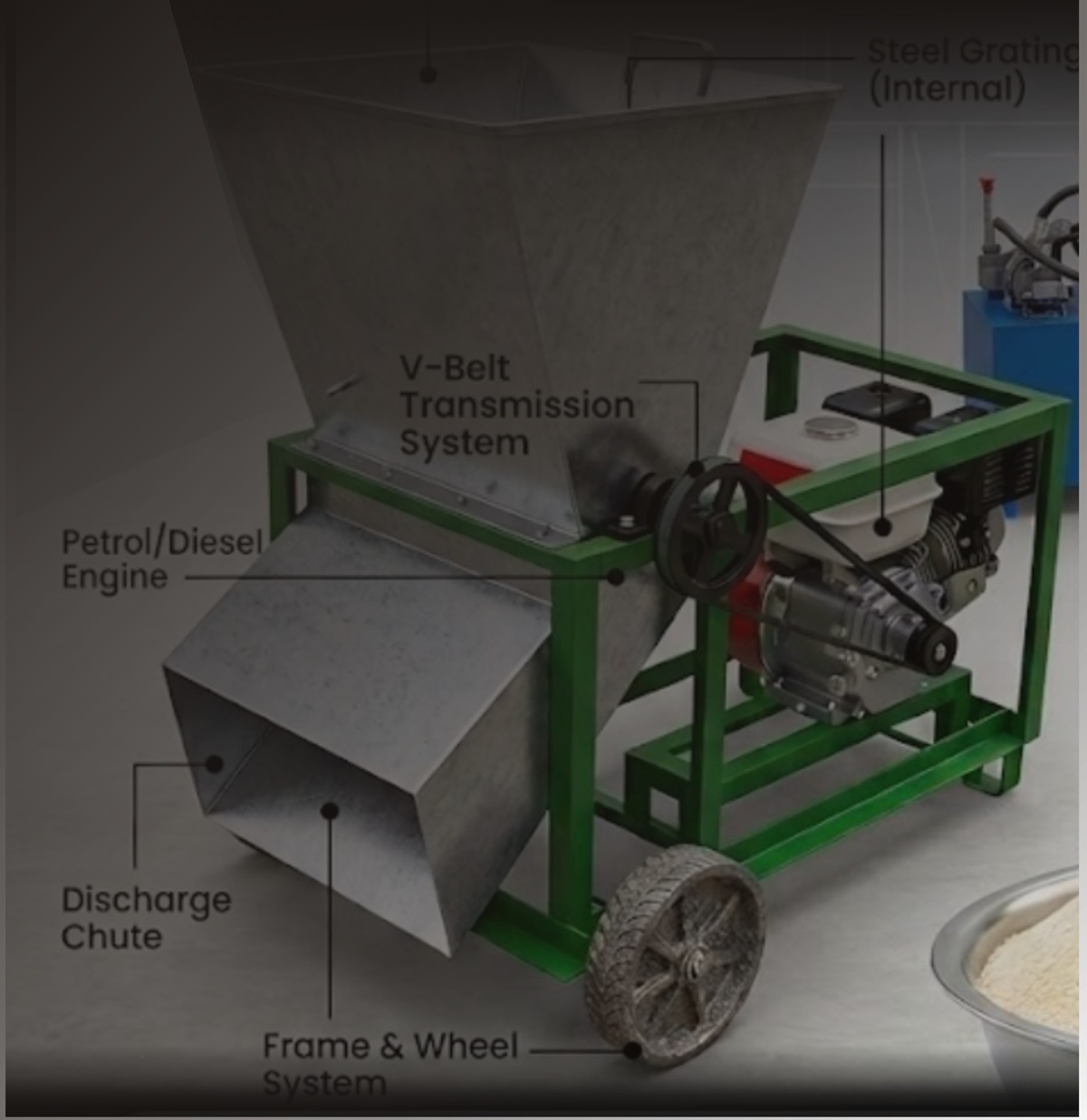
While you can find various sizes of graters across Nigeria, the fundamental mechanical design remains beautifully straightforward. A typical machine consists of a few critical components working in harmony:
- The Hopper: This is the metal or wooden funnel at the top where peeled, washed cassava roots are poured. It guides the heavy roots down into the processing chamber by gravity.
- The Grating Drum (Cylinder): This is the heart of the machine. It is typically a wooden or metallic cylinder wrapped tightly with a perforated stainless steel or galvanized iron sheet.
- The sharp, raised punctures on the sheet act as thousands of tiny teeth that shred the cassava as it passes through the chamber.
- The Power Source (Engine): Most local graters rely on a rugged Lister-type diesel engine or a high-horsepower petrol engine (like the popular "Tiger" or "Lifan" brands). In urban processing hubs with steady power, heavy-duty electric motors are used.
- The Transmission System: V-belts and pulleys connect the engine’s flywheel to the grating drum’s shaft, transferring mechanical energy and setting the drum into high-speed rotation.
- The Chassis/Frame: Usually constructed from heavy-duty angle iron, the frame holds the engine and the grating unit together, absorbing the massive vibrations generated ing operation.

2. Best Maintenance Practices for Longevity
A cassava grater is a workhorse, but because cassava contains water, starch, and corrosive hydrogen cyanide, the machine faces a constant threat of rust and wear. Proper maintenance prevents sudden breakdowns during peak harvesting seasons.
Daily cleaning is non-negotiable as cassava starch dries into a cement-like paste. If left on the grating drum, it hardens, clogs the perforations, and blunts the cutting edges.
Action: At the end of every production day, wash the hopper and drum thoroughly with clean water while the drum is spinning slowly (exercise extreme caution here). Let it dry completely to prevent premature rusting.
Lubrication of Bearings: The shaft of the grating drum spins at incredibly high revolutions per minute (RPM). The pillow block bearings holding the shaft must be lubricated regularly.
Action: Use a grease gun to pump high-quality mechanical grease into the bearings weekly. This reduces friction, prevents overheating, and stops the machine from locking up.
Belt Tension Management: Belts that are too tight will strain the engine and snap prematurely. Belts that are too loose will slip, wasting fuel and drastically reducing grating efficiency.
Action: Check the V-belt deflection weekly. There should only be about 1 to 1.5 inches of slack when pressed firmly.
3. Common Faults and How to Troubleshoot Them
Even with the best maintenance, mechanical wear and tear will happen. Here are the most common issues Nigerian processors face and how local mechanics solve them:
Symptom | Likely Cause | Solution |
| Cassava is coming out chunky, not smoothly grated | Blunted grating sheet or worn-out drum teeth. | Replace the perforated metal sheet wrapping the drum. |
| Excessive vibration and loud knocking noises | Loose frame bolts, unaligned pulleys, or failing bearings. | Tighten all structural bolts; realign the engine and drum pulleys; replace worn bearings. |
| The machine stalls or slows down under load | Loose V-belt or low engine compression/dirty fuel filter. | Tighten the belt by adjusting the engine bed; service the diesel/petrol engine. |
| Discolored (darkish) cassava mash | Iron contamination from a rusting, non-stainless steel grating sheet. | Upgrade to a high-grade stainless steel sheet to maintain food safety and garri quality. |
Conclusion: Supporting Local Engineering Innovation
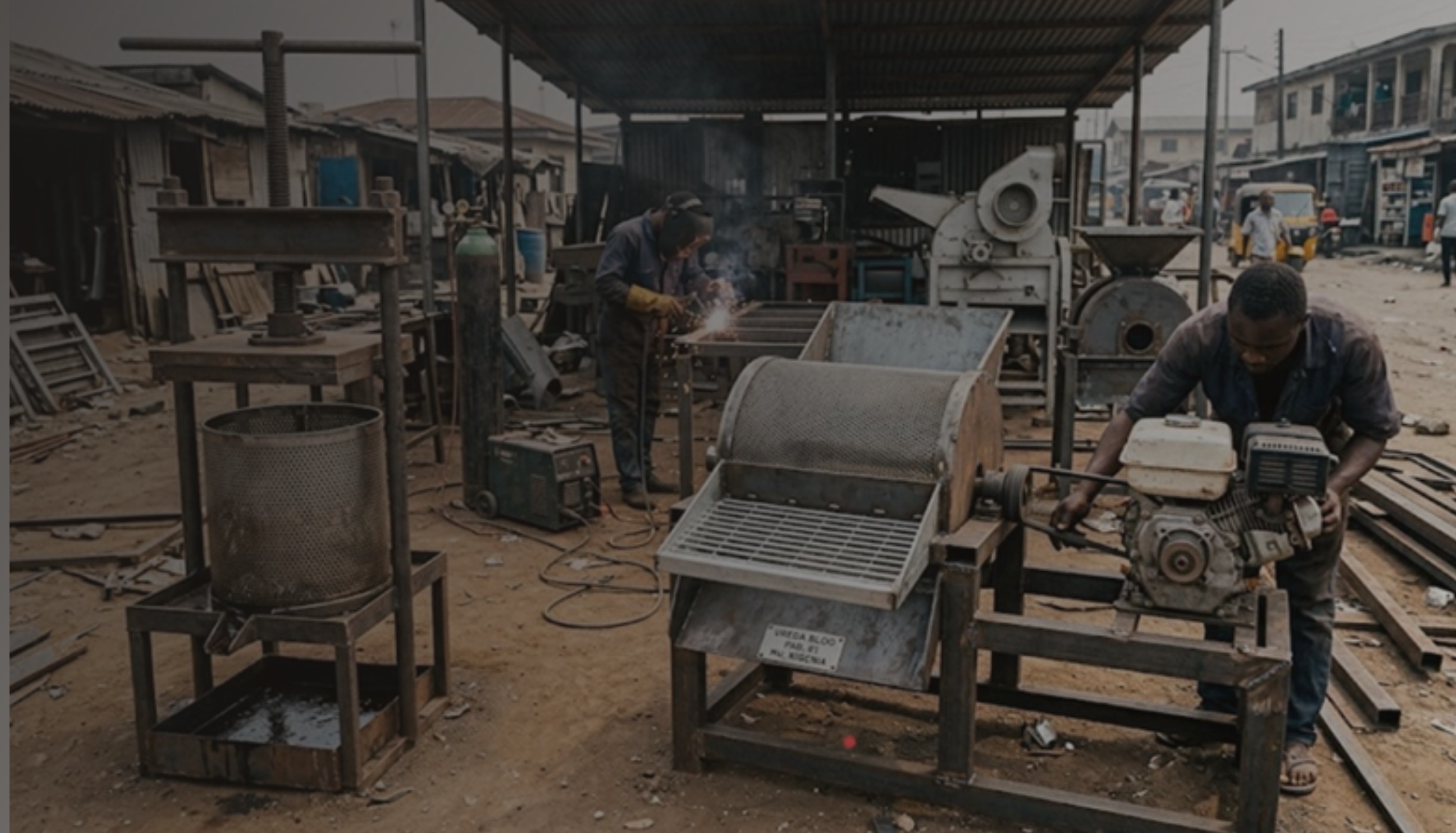
The cassava grating machine is a prime example of functional, indigenous engineering tailored to the needs of African agro-processors. By understanding the mechanical principles behind these machines, local fabricators can design more efficient systems such as automated feeders or double-drum graters and operators can maximize their daily output.
Proper maintenance doesn't just save money on spare parts; it ensures that food production remains uninterrupted, safeguarding food security and empowering local businesses across Nigeria.
Tip for Fabricators: When building or upgrading a grater, always prioritize food-grade stainless steel for parts in direct contact with the cassava. It lasts longer, resists cyanide corrosion, and ensures a cleaner, whiter, and highly marketable final product.
Comments (0)
No comments yet. Be the first!
Please login to leave a comment
Login to Comment